
Five Connectivity Failure Points at Remote Utility and Field Sites
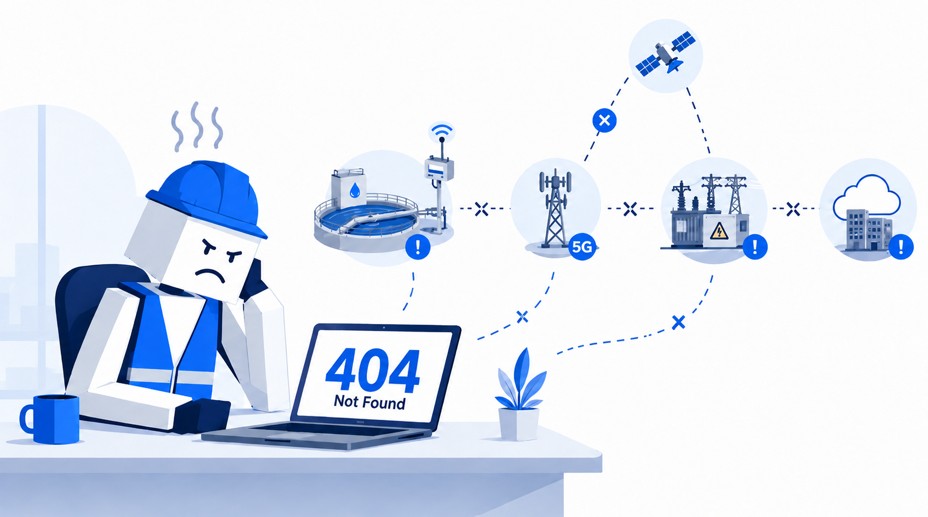
Remote utility sites, energy locations, water and wastewater facilities, emergency response sites, and government field operations all depend on reliable network connectivity. But many of these locations are built around limited infrastructure, temporary fixes, and support models that were never designed for long-term operations.
A site may have internet access, a router, a cellular modem, or a backup circuit. That does not always mean the site is resilient.
When a remote site loses connectivity, the impact can go beyond basic internet access. Field teams may lose visibility into monitoring systems, remote access may fail, vendors may be unable to support equipment, and leadership may not have the information needed to make decisions.
Below are five common connectivity failure points that can disrupt remote operations.
1. Weak or Unreliable LTE/5G Coverage
LTE and 5G are often the fastest ways to bring a remote site online. They can support field offices, temporary command posts, pump stations, remote monitoring systems, mobile teams, and backup internet access.
The problem is that cellular coverage is not always consistent in the places where field operations actually happen.
Remote sites may deal with weak signal, limited carrier coverage, tower congestion, poor antenna placement, or performance that changes throughout the day. A connection that works during initial testing may not perform well once the site is under real operational load.
Common warning signs include:
- Slow application performance
- Dropped VPN sessions
- Intermittent access to cloud systems
- Poor voice or video quality
- Unstable remote access into field systems
- Connectivity that changes with weather, time of day, or site activity
Cellular can be a strong transport option, but it should be tested, monitored, and designed as part of a larger remote site connectivity plan.
2. No Secondary Transport or Satellite Backup
Many remote sites depend on one primary connection. That connection may be LTE, 5G, fiber, fixed wireless, broadband, satellite, or a local ISP circuit.
The issue is not the transport itself. The issue is having no backup path when that transport fails.
For remote utility, energy, water, wastewater, and emergency response environments, a single connection can become a single point of failure. If the circuit goes down, the carrier has an outage, or the local infrastructure is damaged, the site may lose access to headquarters, cloud applications, monitoring platforms, vendor support, and remote management tools.
A more resilient design may include a secondary transport path such as:
- Satellite communications
- LTE or 5G backup
- Fixed wireless
- Line-of-sight wireless
- Secondary ISP circuit
- Temporary deployable communications kit
The right backup option depends on the site, terrain, budget, mission requirements, and available infrastructure. The important part is making sure the site has a realistic recovery path before an outage occurs.
3. Poor ISP, Carrier, or Vendor Coordination
When a remote site goes offline, the technical issue is often only part of the problem.
The bigger issue is ownership.
The ISP may say the circuit is working. The cellular provider may say the tower is operating normally. The equipment vendor may say the router is configured correctly. Internal IT may not have full visibility into the field environment.
Meanwhile, the site is still offline.
This is common in remote operations because the connectivity path often crosses multiple vendors, technologies, and support teams. Without clear ownership, troubleshooting becomes slow, frustrating, and expensive.
A strong remote field network support model should define:
- Who monitors the site
- Who owns the router and firewall configuration
- Who contacts the ISP or carrier
- Who validates failover
- Who supports the field team
- Who documents the final resolution
Remote sites need more than internet service. They need a support model that understands the full connectivity path from the field location back to the systems the operation depends on.
4. Misconfigured Routers, Firewalls, or VPNs
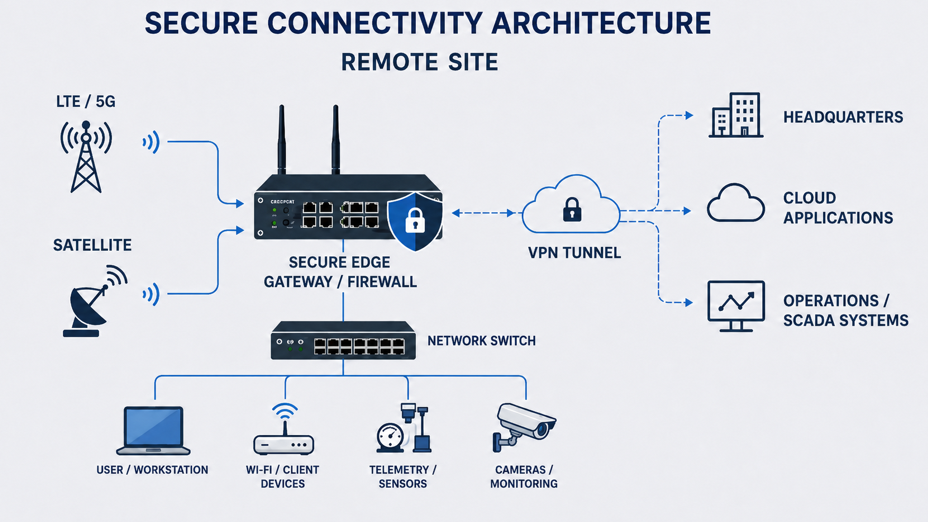
A remote site may have a good internet connection and still experience network problems because the edge equipment is not configured correctly. This is especially important when the site supports SCADA access, security cameras, remote monitoring, vendor access, cloud applications, or secure communication back to headquarters. Common issues include:
- Incorrect firewall rules
- Weak VPN design
- Poor routing decisions
- No segmentation between systems
- No automatic failover
- Inconsistent configurations across sites
- Devices installed quickly and never properly hardened
- Management access that is not properly secured
These issues can create performance problems, security gaps, and support challenges. Remote sites should be treated as part of the organization’s larger network architecture. The router, firewall, VPN, switching, wireless access, and transport paths should be designed together, not added one piece at a time without a clear plan.
5. No Tested Failover or Support Process
Having a backup connection does not mean failover will work when needed. Many organizations discover during an outage that the backup circuit was never tested, the firewall does not route traffic correctly, the VPN does not reconnect, the cellular signal is too weak, or no one knows the recovery steps. Failover should be tested before it becomes an emergency. A remote site should have clear answers to these questions:
- What happens when the primary connection fails?
- Does traffic automatically move to the backup path?
- Does the VPN reconnect?
- Can critical applications still operate?
- Who receives the alert?
- Who troubleshoots the problem?
- How is the site restored to normal operation?
A backup connection is only useful if the organization knows it works.
Why These Problems Matter
Remote connectivity failures are not just technical inconveniences. They can affect operations, safety, reporting, monitoring, customer service, emergency response, and decision-making. For utility, energy, water, wastewater, public safety, and government field environments, downtime can create confusion quickly. Teams may lose access to systems. Headquarters may lose visibility. Vendors may point fingers. Internal teams may have to troubleshoot without the right information. The better approach is to assess remote connectivity before a failure occurs.
A Better Path Forward
Organizations operating remote sites should evaluate connectivity the same way they evaluate power, safety, cybersecurity, and physical access. A strong remote site connectivity review should look at:
- Primary and backup transport paths
- LTE and 5G coverage
- Satellite or alternate transport options
- Router and firewall configuration
- VPN and secure reachback
- Failover behavior
- Monitoring and alerting
- ISP, carrier, and vendor support ownership
- Security and segmentation
- Documentation and recovery procedures
This does not always require a major redesign. In many cases, the first step is simply understanding where the risks are and which gaps matter most.
Final Thought
Remote sites need more than an internet connection. They need a secure, supportable, and resilient connectivity design that can keep operations moving when conditions are imperfect.
Weak cellular coverage, missing backup paths, unclear support ownership, misconfigured equipment, and untested failover are all common issues. The good news is that these problems can usually be identified and corrected before they become major outages.
Top Logic Technology helps organizations assess, design, deploy, and support secure connectivity for remote and mission-critical operations.
If your organization operates remote utility sites, energy locations, water or wastewater facilities, emergency response sites, government field locations, or other infrastructure-limited environments, a Remote Site Connectivity Assessment can help identify where connectivity, failover, support, and security gaps could disrupt operations before they become outages.
Tags: Field Networks, Network Resilience, Remote Connectivity, Secure Communications, Utility Infrastructure